
Venice Biennale: planning the Giardini, Arsenale and your art days
For an in-depth visit to the Venice Biennale, the Giardini and the Arsenale are two distinct focal points. If you want to do justice to both, you can visit them on separate days; for a single art-filled day, making a considered selection is better than trying to see everything. National participations across the city add to the picture. The Biennale is therefore not a single museum that can be casually fitted in between St Mark’s Square and your return journey. The exhibition venue, your personal interests and the attention you have available all shape the visit.
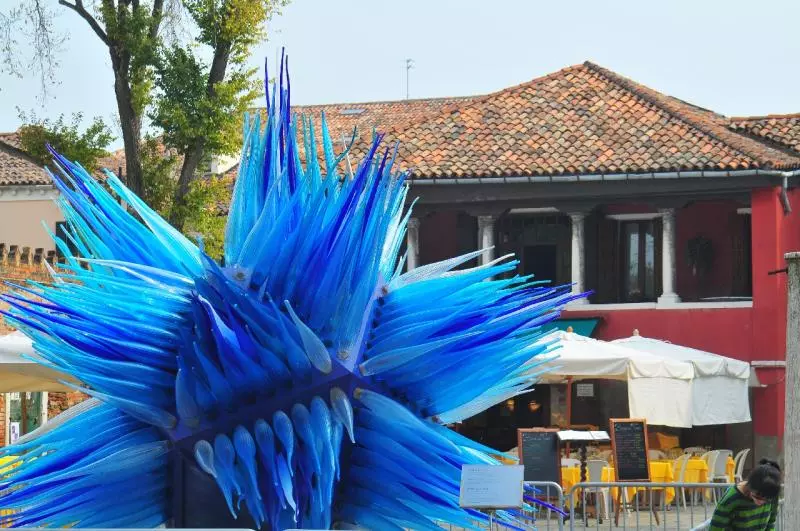 Die Biennale von Venedig
Photo: Alesia Belaya
At the 2026 Biennale Arte, 100 national participations are spread across three areas: 29 in the Giardini, 25 in the Arsenale and 46 across the city. These figures apply to the 2026 edition, not to every future Biennale. Above all, they show why seeing every contribution is not a useful benchmark for a short stay. A small, carefully chosen selection can be more rewarding than a long series of spaces visited only in passing.
The Giardini: experience the exhibition and pavilion architecture together
The Giardini are in the Castello district and have been a historic centre of the Biennale since the first art exhibition in 1895. The first exhibition palace was built for that edition. The Belgian Pavilion, established in 1907, marked the beginning of the development of dedicated national pavilions in the garden. As a result, the site has an architectural history alongside its changing artworks.
A walk through the Giardini can therefore bring together two interests: contemporary art and the opportunity to compare different pavilion designs. The buildings are not merely neutral shells. By paying attention to entrances, sequences of spaces and the relationship with the garden, you can experience another layer of the visit. For architecture enthusiasts, that is a reason in its own right to spend time on the grounds, without turning the visit into nothing more than a walk between façades.
Two or three clear questions can help you decide what to see within the grounds. Are you especially interested in a particular medium, certain artistic practices, or the relationship between artwork and space? These can provide a focus for your route. By contrast, entering every space simply because it is nearby uses up attention that might be better spent on a contribution that truly interests you.
Don’t treat the Arsenale as an afterthought
At the Art Biennale, the Arsenale is a second main venue, not merely an extra pavilion on the same grounds. The Giardini and the Arsenale are distinct, complementary exhibition areas. For the 2026 edition, the combined ticket covers both, and you can start your visit at either venue. There is no need to follow a fixed order to have a well-planned art day.
Choose your first venue according to your own interests. If you are coming mainly for particular contributions, start where your interest lies rather than following a supposedly prescribed order. On a one-day visit, it makes sense to add the second main venue only if you still have enough time and energy to concentrate. A break is not a lost exhibition opportunity; it can help you make sense of what you have seen so far.
One day or two: ticket rules shape the plan
For the 2026 Biennale Arte, a standard ticket allows one entry to each of the two main venues, including on non-consecutive days. However, it does not allow you to leave and re-enter the same main venue. Multiple entries are available with other ticket types, such as three-day or weekly passes. This rule applies specifically to the 2026 edition and should not be assumed to remain unchanged in future editions.
This leaves two clear ways to plan your visit. You can visit both venues in one day if your aim is to get a selective overview. With two art days, you can separate the Giardini and the Arsenale and spend more time at each. With a standard ticket, leaving the grounds for a longer activity elsewhere in the city is not simply a break before re-entering. Plan your exhibition visits and time outside the venues as continuous sections of your day.
For a group with varied interests, the two-day option can be more enjoyable. One art day stays manageable, while the other leaves room for a walk or a meal together. If you are only in Venice briefly, it is fine to visit just one main venue. The quality of a visit cannot be measured by the number of national pavilions ticked off.
Choose city pavilions as a targeted addition
National participations across the city extend the art programme beyond the main venues. A single city pavilion can fit well into a part of the city you already plan to visit. Several venues far apart, on the other hand, mean extra travel and less time at a main venue. For a short stay, choosing one additional contribution with care is more rewarding than spontaneously collecting as many addresses as possible.
An art walk through the historic city of Venice is a distinct way to visit. It can bring together buildings, alleyways and a selected exhibition venue without aiming to cover the entire Biennale in a day. This makes an intensive exhibition visit different from a city visit with an art focus, even though both are part of the same trip.
Choose accommodation around the art routes you’ll repeat
If you have several art days planned, your accommodation is not just a place to sleep; it is the starting point for routes you will take repeatedly. A place in Castello may suit the eastern main venues, while a more westerly location may be more convenient for arriving by train. Comparing where to stay in Venice makes this distinction clear. The best location for arrival and the best location for two exhibition days may not be the same.
Accommodation in Venice makes it possible to keep exhibitions and evening plans close together during your stay. By contrast, accommodation on the Lido di Venezia offers an island base with regular water journeys. This island base is not the same as the Art Biennale’s main venues; trips there and back remain separate parts of your exhibition days.
Staying on the mainland is a different choice again. Staying overnight in Mestre does not eliminate travel around the city; it adds a connection to the historic centre. This may suit a trip that includes time on the mainland. However, if you plan to focus mainly on the Giardini and the Arsenale over several days, factor in this repeated change of location.
Keep suitcases out of your exhibition plans
At the 2026 Biennale Arte, there is a cloakroom for small items, but no storage for suitcases. Visiting an exhibition directly between disembarking, arriving by plane or departing by train is therefore not a straightforward solution for your luggage. It is better to begin your art visit after dropping off your bags, once arrival and accommodation arrangements are taken care of. Visiting with the bags you would normally take on an outing makes for a very different experience from visiting with all your travel luggage.
The vaporetto journey consists of getting to the landing stage, travelling by water and walking the final stretch. On a long exhibition day, a clear route there and back is more useful than making several extra changes. Getting to Venice is a separate matter: it first takes you to your accommodation or arrival point, not automatically into a relaxed day of art.
Build your visit around your own interest in art
For a first visit, one main venue with a carefully chosen selection of contributions may be enough. For a deeper interest in art, two days at the main venues, kept separate, plus a suitable city pavilion make a coherent plan. Architecture, particular media or specific artistic practices can each give your route a different direction. Let your own interests determine which spaces you explore in depth and which you skip.
The Art Biennale is a specific reason to travel as part of event trips in Veneto, not a substitute for the city as a whole. If you also want to get to know Venice, leave time between art days to explore a neighbourhood. That way, both the changing exhibition and the historic surroundings have space of their own, rather than being remembered merely as a backdrop to an overpacked itinerary.
