Events in Veneto: Art, Tradition and Live Performance
From art in Venice to rowing races and opera in Verona, choose events to suit your travel dates, interests and location.
In Veneto, practical planning depends on where you arrive and where you are travelling next that day. Venice and its islands, an Adriatic seaside resort, an inland city and a mountain destination all require different connections. So first decide on your destination for the day and the final leg to your accommodation; only then can you work out whether train, bus, water bus, car or a combination is best. Cities, coast, lakes and mountains differ in distance and connectivity. Whether you are taking a short city break or a longer tour, your choice of Veneto’s cities, provinces and landscapes should match your preferred type of trip.
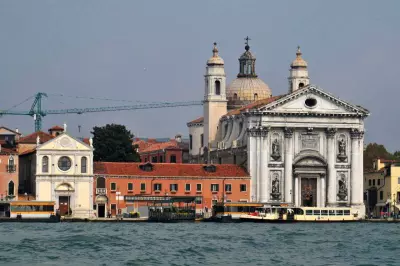
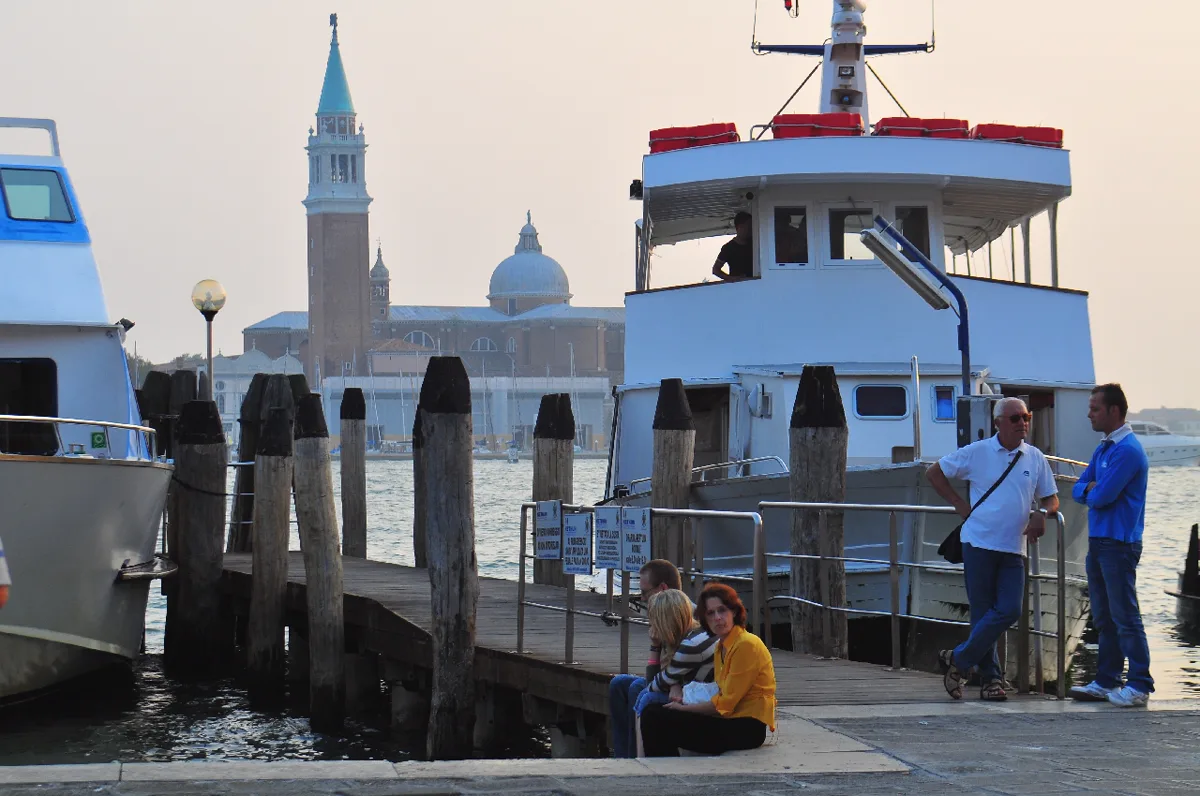 Fahrgastschiffe an einem Anleger in Venedig, im Hintergrund San Giorgio Maggiore.
Photo: Alesia Belaya
If you are travelling to the historic island city, Venezia Santa Lucia is the obvious station: it is in Venice itself, on the Grand Canal. Venezia Mestre, by contrast, is on the mainland and works as a transfer point if your accommodation is in Mestre, you are continuing elsewhere in the region, or the connection there suits you better. The two names therefore do not refer to interchangeable stations in the same location. When booking, do not rely solely on the train destination “Venice”; choose the station that best matches your first overnight stop and onward journey.
Arriving at Santa Lucia station does not mean you are right at the door of every accommodation. Depending on its location, you may need to walk through lanes and over bridges, or take a water bus to a suitable landing stage. If you are staying on the mainland or in another town in the region, you will often need another connection after the train. If you are staying in several places, plan around the stations for each leg rather than just the departure and destination stations for the overall booking. The locations of accommodation in Venice provide a useful framework if the lagoon city itself is your main destination.
Marco Polo Airport has both bus services towards Venice and Mestre and a water connection into the lagoon. These are different ways of arriving: buses reach road and railway hubs, while the water bus serves landing stages in the city and on the islands. So choose according to your actual end point. If your accommodation is near Piazzale Roma or the railway station, travelling overland may be more straightforward; if it is near a water-bus landing stage or on an island, arriving by water may make the transfer easier. In either case, remember to allow for the walk between the landing stage and your accommodation.
In addition to services to Venice and Mestre, Marco Polo has regional connections, including towards seaside resorts, Padua, Chioggia and Cortina d’Ampezzo. The right service depends on your destination and travel date. If you are heading to the Adriatic coast, compare the actual arrival point with your accommodation instead of automatically travelling first to the island city. For Jesolo or Caorle, the regional connection is a separate part of the journey.
Treviso Canova Airport is another option in its own right. Bus services to Venice and Mestre are available; if you are travelling further into the region, choose your connection according to your destination. A flight sold as being to “Venice” may therefore arrive somewhere other than Marco Polo. When planning transfers, allow not only for the journey itself but also for collecting luggage, getting to the bus and changing between the airport and railway areas. When travelling to Venice, it matters whether the airport transfer goes to Mestre, Piazzale Roma or a water connection.
In the historic city, walking is a normal part of getting around: between two nearby places, the direct route through lanes and over bridges may be easier than taking a detour to a landing stage. For longer journeys, island-hopping or travellers who want to limit how far they walk, the water bus can make the day easier. The two can be combined. So plan each journey from start to finish—accommodation, landing stage, destination and return trip—rather than as a single ride on a route map.
A day pass is not automatically the best option for every stay. What matters is how often you will actually travel, whether you plan to visit several islands and whether your walking routes fit together well. A short city visit with a few nearby destinations may call for something different from a stay of several days involving trips between the station, accommodation and islands. ACTV paper tickets and travel cards must be validated at the start of each journey and every time you change vehicles. Digital bus and tram tickets, on the other hand, must be activated in the app before boarding. Marco Polo Airport services are not included in standard tourist single or time-based tickets without an airport supplement; Alilaguna is a separate service. So plan your airport transfer separately from your journeys around the city. For journeys on the water, plan vaporetto, walking and tickets together as parts of the same day’s itinerary.
A car is particularly useful when a trip includes several rural destinations, smaller towns or different regions. In the historic island city, however, it is not a way to get between the sights. If you arrive by car, you will first reach road and parking hubs such as Piazzale Roma or Tronchetto; from there, continue on foot or by public transport. Bringing a car for a stay in the central islands often means extra parking and luggage arrangements without replacing the need to get around the city on foot or by public transport.
For a tour, combining train travel with a rental car can make more sense than having a car for the entire trip: take the train between larger towns, rent a car for more remote excursions, and go without a vehicle during city stays. Conversely, having a car throughout is practical if your accommodation and day-trip destinations are outside well-connected hubs. What matters is where you are staying and how you will reach your destination, not a blanket choice between a “rail holiday” and a “driving holiday”. Coach and cruise excursions, in turn, involve a different transfer point. If your ship is docked at Marghera, treat the Venice and Marghera cruise port as a separate arrival point, not as interchangeable with a landing stage in the historic centre.
When travelling from Venice to an inland destination, what matters is how many changes your route actually involves. Padua or Verona fit into a rail trip differently from a mountain accommodation or a town on the eastern stretch of coast. Lake Garda also has a long shoreline; arriving at its southern end does not mean that every other lakeside town is quickly accessible. If you are staying by the lake, choosing the right base matters more than assuming the entire shoreline can be covered in a single day trip. The Lake Garda accommodation region and the Veneto lakeside town of Peschiera del Garda can help you pinpoint which part of the lake you have in mind.
The mountains should also be treated as a separate leg of the trip. The final stretch of a journey to Cortina or other towns in Belluno province may need different arrangements from the train or bus leg to a larger town. When combining the lagoon and the Dolomites, avoid scheduling a packed sightseeing programme on the day you arrive after a long onward journey. If the mountains are your main focus, choose accommodation as a base for that particular area: Belluno and Cortina d’Ampezzo are different starting points for planning your travels in the region.
The time of year also affects your daily plans. In autumn and winter, acqua alta may affect parts of Venice; leave enough leeway between fixed appointments instead of trying to link several destinations with tight walking connections. In warmer weather, breaks and a relaxed arrival day can help the group manage walking and luggage without unnecessary rushing.
If you have limited mobility, are travelling with a pushchair or have young children, the route between the stop, bridge and accommodation is part of the decision. Venice has designated accessible routes, but that does not mean every walking route is step-free. A fixed address near a suitable landing stage, fewer luggage transfers and a manageable area to explore can make your stay easier. If people in your group walk at different speeds, choose one main focus for each half-day rather than trying to fit in several scattered visits. On a family holiday in Veneto, time for meals and rest is often more important than squeezing in as many stops as possible.
For an event, too, the journey between venues is part of the day. If you are combining Venice with the coast, a lake or the mountains, allow for a proper transfer between regions; if you are planning trips beyond the centre, you can also consider the Venice Lagoon as a destination for a day of its own.
Arrival day is rarely a full holiday day. Flights, train delays, luggage, transfers and the final journey to your accommodation all take time, even when each individual leg seems manageable. Plan no more than one destination near your accommodation for that day, and save longer visits for a full day of your stay. This is especially important on a tour before moving to new accommodation: reaching a new place involves more than just a journey—it also means checking out, transporting luggage and getting settled.
The same applies in reverse on departure day. Accommodation near your final transport hub can make the morning easier; if you are leaving early from accommodation on an island, allow realistic time to get to the station, bus or landing stage. Do not fill your last day with an excursion far away if you need to catch a flight or train afterwards. If your trip combines Venice with the coast, Lake Garda or the Dolomites, it is best to treat the journey between these areas as a separate leg rather than an invisible gap in your itinerary.
For each day of your trip, consider five things: your starting point, your actual destination, the final leg to your accommodation, how much walking is involved and your luggage. Then check whether you need to change from train to bus or water bus, and whether your group can manage the transfer comfortably. For a trip to Venice alone, straightforward access to the lagoon city matters more than a rental car; for a route through several provinces, connections between the different legs may take priority. If you have not decided on your destinations yet, start by considering the differences between city, coast, lake and mountains, and plan your transport afterwards.
This way, your arrival, accommodation and daily journeys will fit together: choose your station or airport connection for Venice according to where you are staying, combine walking with water transport, and plan regional connections all the way to your actual destination. Fewer unplanned transfers mean more time at your destination.