
The Venetian Lagoon
Which side of the Venetian Lagoon would you like to explore: the built-up city, the culture of the artisan islands, traces of early settlement, or the transition to the sea? This is a more useful starting point than trying to make the longest possible list of islands. Venice lies across a group of islands divided by canals and bridges; other islands and the mainland shores form part of the wider lagoon area. The lagoon is a brackish-water basin, not simply another name for the open Adriatic. Venice and its lagoon together form a UNESCO World Heritage Site. Here, city, water, and landscape are closely connected.
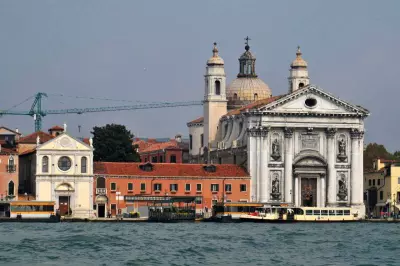 Lido die Venezia an der Lagune von Venedig
Photo: Alesia Belaya
A waterscape that extends beyond Venice
The historic city is the lagoon’s best-known point of reference, but it does not explain all its islands. Murano, Burano, and Torcello each have their own cultural focus; the Lido di Venezia links the lagoon with a setting on the Adriatic. At the southern edge lies Chioggia, with its own distinctive historic urban fabric. Choose one focus from this variety rather than trying to connect every place in a single day: urban design, craftsmanship, early settlement history, or the sea and islands.
A base in Venice makes sense if you want to spend most of your time in the historic city. The canals, squares, and bridges are then not just routes between individual sights, but part of the experience in their own right. The Grand Canal, the Rialto area, and St Mark’s Square offer different points of entry. To understand the lagoon, it is important to distinguish this densely built-up urban world from the character of the other islands. A visit to an island can complement a stay in the city, but it should not turn that stay into mere waiting time between boat rides.
Murano and Burano: two craft traditions, two perspectives
Murano is associated with art glass. This gives a visit to the island a clear thematic anchor, with color, form, and material taking center stage. Visitors with an interest in these things may experience the island differently from those simply moving from one famous name to the next. Staying on Murano is also a different choice from adding a short visit to a stay in Venice. The decision is not just about choosing a day trip, but about deciding which surroundings will be your base each day.
Burano is known for its multicolored houses and lace-making tradition. Here, the local townscape sits alongside a different kind of craftsmanship. It invites you to look at how colors shape the way we see the houses, and how working with threads differs from working with glass. Choosing a base on Burano brings this island’s character to the fore. It is a different choice from staying in Venice if your main goal is to explore the historic city in depth.
Murano and Burano need not be treated as two obligatory stops. Their contrast makes sense for a trip focused on crafts, while visitors interested in architectural history may prefer another island theme. On Murano, the focus is on the material of glass and its forms; on Burano, it is on the relationship between the colors of the houses and delicate lace-making. If you choose to visit both islands, you can use this contrast as a shared guiding question and give each one its own time.
Torcello: early settlement history instead of urban density
Torcello is one of the lagoon’s oldest settlements. The Basilica of Santa Maria Assunta, with its Byzantine mosaics, and the Church of Santa Fosca offer a different focus from Murano and Burano’s craft traditions. The mosaics include a depiction of the Last Judgment; Santa Fosca has a Greek-cross floor plan. These features make Torcello interesting to travelers who want to connect architecture with visual art.
The scale of a visit changes here: instead of numerous urban spaces, the focus is on a historic architectural ensemble. A good guiding question is how the religious architecture relates to the lagoon’s older traces of settlement. This is different from trying to find as many photo opportunities as possible in a short time. To compare Murano, Burano, and Torcello thematically, it is worth distinguishing their three themes—art glass, lace-making, and early architectural history—before making your choice.
The Lido: a lagoon island with an Adriatic side
The Lido di Venezia lies between the Venetian Lagoon and the Adriatic Sea. This makes it fundamentally different from an island devoted solely to city life or crafts. Beaches, Art Nouveau villas, the townscape of Malamocco with its calli and campielli, and the dunes of Alberoni are all part of its character. The Lido is also associated with the film festival, but its value as a place to stay cannot be reduced to this cultural event. It has its own blend of seaside-resort history, settlement, and landscape.
For a vacation where the sea and the Venetian islands are equally important, the Lido di Venezia as a base is therefore a distinct option. Those who want to spend several days exclusively in the historic city are choosing a different focus. A location between two bodies of water does not automatically answer every question about how to plan your days. It first describes the island’s character: on one side is the lagoon, an urban and island-shaped environment; on the other is the Adriatic Sea.
The Lido di Venezia is not Lido di Jesolo. The similar names can easily create a false impression of their locations. Jesolo belongs to a different coastal area; the Venetian Lido is an island in the lagoon with a connection to the sea. If beach days are the main purpose of your trip, it may be useful to compare other places along the Adriatic coast. For a lagoon stay, the question is instead how much city life, island culture, and sea you want to combine.
Chioggia: see the lagoon from the south
Chioggia lies between the sea and the Venetian Lagoon, at its southern edge. Canals and regularly laid-out streets shape the historic city, with Corso del Popolo as a central urban landmark. This distinctive layout should not be treated as a smaller copy of Venice. It offers a different way into the lagoon area, where fishing history and the built urban environment go hand in hand. Choosing Chioggia as a place to stay brings this southern perspective to the fore.
Sottomarina is also part of the municipality of Chioggia and is connected to the municipal center by the Ponte dell’Isola dell’Unione. This makes it possible to understand the difference between a lagoon city and the Adriatic coast within a single municipality. This distinction matters when choosing a base: canals and lanes as your everyday surroundings offer a different focus from the sea and the beach. Chioggia should not be treated as just another casual stop on a northern lagoon itinerary, either. Give the historic city its own place in the story of your trip.
Build a cohesive stay around your island interests
For a first stay in Venice, the city can remain the main focus, with one island offering a deliberate contrast. Murano adds art glass, Burano brings color and lace-making, and Torcello offers early architectural history. For a trip specifically about the lagoon, two or three of these perspectives can be compared. The Lido, in turn, adds the transition to the sea. Your choices will make more sense if each stop answers a different question, rather than simply offering another version of the view you have already seen.
Water buses are part of getting around Venice and the lagoon islands. So the number of places you want to visit is not the only factor in planning your day: every transfer takes time and attention for arriving, finding your bearings, and moving on. Don’t plan sightseeing as an unbroken chain, and leave time to experience each island itself. A city base with one focused island theme can create more coherence than a day spent mostly changing locations.
In the end, the key question is not which island is the most beautiful. It is which surroundings you want to explore in depth over several days, and which are enough as a deliberate addition. Venice for city life and architecture; Murano or Burano for an island craft tradition; Torcello for early settlement and architectural history; the Lido for the connection between lagoon and sea; and Chioggia for the southern urban landscape. These differences give your stay a clear sense of purpose. They also bring the lagoon into focus as a landscape of distinct places and ways of life.
