
Landscapes in Veneto
Which landscape in Veneto suits your trip: coast, lagoon, river delta, hills, lake or mountains? The answer changes not only the view, but also the pace of your stay. Distances, townscapes and daily itineraries vary greatly between the Adriatic coast and the Dolomites. Choosing a landscape first and comparing individual places afterwards helps you avoid an itinerary that looks short on the map but keeps shifting its focus.
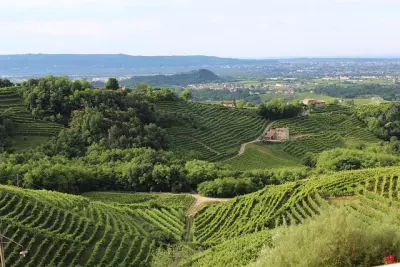 Die Landschaften von Venetien, hier die Hügel in Treviso
Photo: daniF auf Pixabay
The Adriatic coast and lagoon: two different worlds of water
In the east, Veneto meets the Adriatic. Independent resort towns line the coast, including Bibione, Caorle, Eraclea, Jesolo and Cavallino-Treporti; farther south, Sottomarina, Rosolina and Porto Tolle are also part of the coastal region. Sandy beaches and seaside holidays define many stretches, but the towns differ in how they combine the sea, town centre and hinterland. The Adriatic coast of Veneto is therefore not a single resort. To choose a specific destination, you could compare, for example, the location and distinctive features of Jesolo with the historic centre of Caorle. If you want to stay right by the sea, accommodation options in Jesolo or Caorle can help you narrow down the location; the specific address determines how the beach, town centre and excursions fit together.
The Venice Lagoon lies close to the coast but follows a different landscape pattern. Open stretches of water, islands and built-up shores alternate here. The historic city of Venice is its best-known place, but it is not synonymous with the lagoon as a whole. If you want to combine city visits with islands, plan the journeys over water as part of the day—not as a short walk between neighbouring city districts. Staying in the lagoon city may be more convenient for this than choosing a beach resort on the mainland; however, accommodation in Venice covers a range of locations, which do not all offer the same access to the station, waterfront or island connections.
Po Delta: water shapes the landscape and routes
South of the lagoon, the Po’s branches and the transition to the sea shape the plain. In the Po Delta, river channels, canals, lagoons, islands and wetlands alternate; land and water are not opposites but form a closely interwoven mosaic. The area is in the province of Rovigo and differs markedly from the more densely built-up lagoon city. Visitors here are more likely to seek open spaces and wildlife watching than a series of major attractions within walking distance in a city centre. The overview of the Po Delta helps you get your bearings among its different areas. A stay in the city of Rovigo and its surrounding area is not automatically a stay in the delta: accommodation in Rovigo can be a starting point for your search, but nature destinations lie along different river branches and lagoons depending on your plans.
Euganean and Berici Hills: gentle landscapes south of the Alps
Inland, south of Padua, the Euganean Hills rise distinctly from the plain. Their volcanic origins explain the rounded, isolated ridges; around their edges, landscapes, villages and long-established spa towns meet. This makes for a different kind of stay from the coast: instead of a long beach, the choice revolves around individual viewpoints, towns and routes through the hills. The Euganean Hills work well as a destination in their own right or as an addition to a visit to Padua. The Berici Hills, also a distinct landscape area, lie south of Vicenza, but are not part of the Euganean Hills. If you are looking for a city base in the area, you can compare Padua with locations around the hills; if you plan to stay in the city of art, searching for accommodation in Padua is a practical starting point, while staying outside the city involves different travel routes.
Lake Garda: lakeside towns between water and mountains
Lake Garda borders three regions; its Venetian shore is part of the province of Verona and stretches from Peschiera del Garda in the south to Malcesine in the north. The character of the lakeshore changes along the way: southern towns lie beside a broader plain, while farther north the mountains and steeper slopes draw closer to the lake. Monte Baldo rises behind the eastern shore. As a result, places all associated with “Lake Garda” can suit quite different expectations. The Venetian part of Lake Garda gives you a broader overview; individual guides to Garda and Lazise show how much the lakeside towns and their hinterlands vary. If you want to stay by the lake, choose the specific town before comparing accommodation: options in the province of Verona also include places away from the water.
The Dolomites and Cadore: valleys, not a single mountain backdrop
In the north, the landscape rises into the Dolomites. When planning your trip, it helps not to list simply “mountains” as your destination: valleys and areas such as Cortina d’Ampezzo, Cadore, Valbelluna, Zoldo, Falcade and Alleghe are not right next to one another, and each has its own local character. The regional layout of the Dolomiti Bellunesi includes several such areas, making clear why one place to stay will not necessarily suit all the mountain destinations on your wish list. The overviews of the Dolomites and Cadore can help you narrow down the options. For a stay in the province, accommodation in Belluno can provide a starting point for comparison, but the city is not the same as staying in a mountain valley. If you are planning hikes, winter sports or scenic drives, make the specific valley town your starting point for choosing where to stay; routes and seasonal conditions vary from place to place.
Which area suits which kind of trip?
For a beach holiday, the Adriatic coast is the obvious choice; for islands, canals and historic cityscapes, the lagoon is a better focus. The delta is for travellers who deliberately seek waterscapes and broad, sparsely populated areas. The Euganean Hills offer a change from the plains and can be combined with Padua without confusing them with the city itself. At Lake Garda, the location on the southern or northern shore also shapes the landscape you experience. In the Dolomites, it is best to choose the valley before deciding on individual excursions.
On a short trip, choosing one clear focus usually works better than trying to give equal weight to the coast, lagoon, delta and mountains. With more time, you can combine two neighbouring areas, such as Padua and the Euganean Hills or a seaside town and the lagoon city. Between landscapes that are far apart, the journey itself becomes part of the trip. If you first decide whether water, city, hills or mountains should define your stay, you can then choose a suitable town and the right location within it.
