
Diving in Veneto: underwater destinations and experience
A diving holiday in Veneto can suit very different interests: getting started with instruction, discovering an underwater habitat, or taking a trip shaped by several dives. These aims should not blur into a single wish list. Off the Adriatic coast, the Tegnùe form rocky marine habitats; Lake Garda offers a freshwater setting, with lakeside towns and Monte Baldo in the background. The key is to decide what kind of underwater experience you are looking for and what level of experience you bring to it. The right trip starts with that distinction, not with the most spectacular description of a single site.
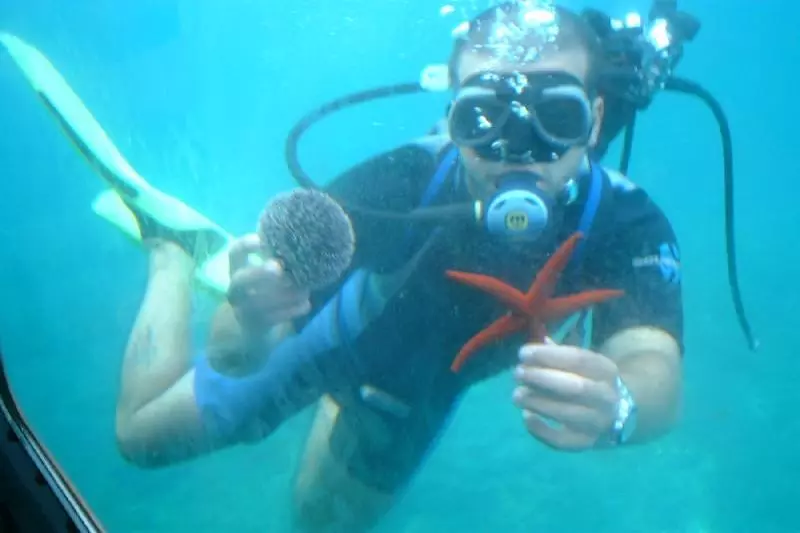 Tauchurlaub Venetien
Photo: Dago Wiedamann
The Tegnùe: rocky habitats off the coast
The Tegnùe are natural rocky underwater formations in the northern Adriatic. They occur off Chioggia, Caorle, Tre Porti and Malamocco, among other places, and differ from the sandy seabeds around them. Calcareous red algae contribute to their formation. Their appeal lies not only in one striking feature, but in the variety of structures: rock formations, cavities and overgrown surfaces create different habitats. For a nature-focused diving holiday, that is a more concrete theme than a general hope for as much underwater adventure as possible.
Off Sottomarina, this underwater world includes sponges, anemones, crustaceans and conger eels. Even so, no particular animal is a guaranteed highlight of a dive trip. If you are interested in small habitats and their inhabitants, you can shape your diving holiday around observation. Accommodation in Sottomarina connects your time on land with the coastal area near Chioggia. However, choosing where to stay does not replace choosing the right dive: proximity to the beach and the location of an underwater site are two different things.
Protection means more than a beautiful natural setting
Most of the Tegnùe reefs near Chioggia lie within a protected area, where fishing and removing anything are prohibited. Special rules also apply to recreational diving. The underlying principle fits a nature-focused trip: underwater formations are habitats, not souvenirs. Observing and photographing them are very different from touching, taking or altering anything at the site. A respectful dive leaves the place undisturbed, so its inhabitants and overgrown surfaces remain unharmed.
Nature observation should also match your level of training. A rocky formation is not easy to dive simply because it looks inviting in a photograph. Safe navigation, controlled conduct in the water and appropriate supervision matter more than the wish to get as close as possible to an interesting subject. In a group with different levels of experience, the least experienced diver sets the limit for everyone. A diving holiday works better when you pursue your interest in nature within your abilities, rather than measuring your abilities against your holiday expectations.
Training and dive trips have different aims
For beginners, guided learning comes first. A course builds skills; a trip to a natural underwater site requires an appropriate level of training and experience. After a long break, a supervised return to diving may also make more sense than jumping straight into more demanding plans. This is a valid travel choice in its own right, not a detour on the way to a proper holiday. If you want to focus on learning, avoid filling every free day with long journeys between places.
Experienced divers can plan their trip more specifically around the habitat they want to explore. But experience does not transfer equally to every setting: the sea and freshwater, an unfamiliar site and familiar conditions each call for their own assessment. A realistic aim might be to discover the Tegnùe as a natural habitat and then leave time to enjoy the coastal town. Less practical is trying to combine training, as many different sites as possible and daily excursions when you have only a few days of holiday.
Chioggia for time out of the water
Chioggia lies between the sea and the lagoon, on the southern edge of the Venetian Lagoon. Canals, calli (narrow streets) and Corso del Popolo define the historic town. If you want to combine your diving holiday with a visit to the town in its own right, this gives you a clear second focus. The town of Chioggia is more than a place to wait between dive trips: its historic urban landscape reflects a different relationship with water from that of the rocky seabed offshore.
With accommodation in Chioggia, the town can become the focus of your days on land; Sottomarina puts more emphasis on a coastal stay. Both are part of the same municipality, but suit different travel interests. This distinction is particularly useful for a group where only some people want to dive. A shared base can give non-divers something of their own to do each day, rather than making every decision revolve around the underwater programme.
Lake Garda is a different travel choice
Lake Garda offers a freshwater setting and the chance to plan a holiday around its lakeside towns. Malcesine is one such town, and diving is among the sporting activities mentioned there. That does not mean, however, that any stretch of shore or any accommodation offers a suitable entry point. Treat the dive portion of your stay and your days around the lake as related but separate parts of your plans. That way, the landscape can be a highlight in its own right without creating false expectations about the dive site.
Choosing accommodation in Malcesine lets you build your stay around a lakeside town. This is quite different from the Sottomarina–Chioggia combination: by the lake, the shore and mountains shape your time on land, while the coast brings together the Adriatic and a historic lagoon town. So do not decide solely on the basis that both regions offer diving. What matters more is which setting you would enjoy even on a day without a dive.
Underwater photography needs its own pace
If you are travelling with a camera, make observation and photography a deliberate focus. A group keen to take in lots of different sights quickly has a different pace from someone who wants to spend longer at a particular formation. This affects expectations for the group dive and the schedule. Photography must take second place to diving safely and protecting the surroundings. A good photo is no reason to touch rock growth or animals, or to overestimate your experience.
At the Tegnùe, it can be especially rewarding to look beyond large subjects. Overgrown surfaces and small habitats tell you as much about the area as the outlines of its rocky formations. This observational approach sets a nature-focused diving holiday apart from a trip devoted solely to ticking off a list of notable sites. It also helps you set expectations for your holiday without assuming particular sightings, visibility or daily conditions.
Make days on land part of your diving holiday
A diving holiday needs a plan that does not depend entirely on every individual dive trip. Alongside your underwater interests, choose a second focus: by the sea, for example, the town of Chioggia; by the lake, a lakeside town and its surroundings. Then days off have value in their own right. Beach days on the Adriatic coast can complement a coastal stay, but they are no substitute for training or an interchangeable underwater programme. Each activity can have its own purpose.
To make your choice, you need just three clear answers: Do you want to learn, put existing skills into practice, or observe nature particularly closely? Are you drawn to the rocky marine world of the Tegnùe or to Lake Garda as a freshwater setting? And which place should shape your holiday out of the water? Only when you combine these choices do you have a diving holiday suited to your experience and the whole group. The number of dives you plan is a consequence of your overall trip, not the starting point.
