
Province of Belluno: Five Distinct Areas
Find accommodation
When choosing where to stay in the Province of Belluno, one question is more useful than a list of famous peaks: what kind of landscape do you want to shape your holiday? The area ranges from open valleys to high-alpine scenery. The Belluno Dolomites are divided into five areas: Arabba–Marmolada, Cadore–Tre Cime–Comelico, Cortina d’Ampezzo, Valbelluna and Zoldo–Falcade–Alleghe. Start by sorting out these differences, and you can choose a place to stay based on your travel interests rather than treating every name as an interchangeable base.
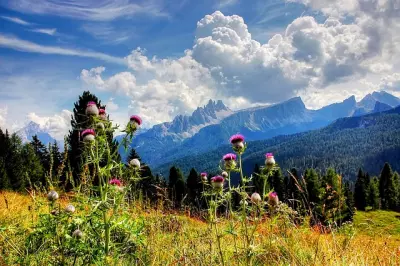 Provinz Beilun (Belluno), Corda del Lago
Photo: kordula vahle auf Pixabay
Five landscapes, five distinct features
These five names are neither a ranking nor promises of specific activities. They describe distinct regional profiles. For planning, it is worth deciding first what kind of setting and holiday you want. Only then does it make sense to look at specific places and suitable accommodation. A short trip usually benefits from a clear focus; on a longer stay, combining distinctly different areas can be appealing, provided the journeys involved fit your schedule.
Arabba and Marmolada: mountain passes and high alpine scenery
Arabba–Marmolada is a distinctly alpine choice. Mountain passes and the Marmolada define the landscape here. This area suits travellers who want high alpine scenery to be the main theme of their trip, rather than planning their days around city sightseeing or a single lake. When choosing where to stay, consider whether the surroundings themselves are meant to be the experience, or whether Belluno is just one stop on a longer trip through Veneto. For a stay in Arabba or Rocca Pietore, it is worth choosing the particular town as a fixed base for your trip.
Cadore, Tre Cime and Comelico: villages among distinctive peaks
Cadore–Tre Cime–Comelico brings together villages and striking mountain formations. It is well suited to a trip shaped not by a single place, but by the interplay of settlements and mountain scenery. Cadore refers to a wider area and should not be equated with a single municipality. If you are planning a specific stay, you could consider Auronzo di Cadore, Pieve di Cadore or San Vito di Cadore as distinct choices of where to stay. Make your choice based on the daily pace you want and the places you actually plan to visit, not solely on the famous name Tre Cime.
Cortina d’Ampezzo: a destination in its own right
Cortina d’Ampezzo is listed as a distinct area in its own right among the five. Choosing it as your main destination means focusing your stay on a clearly defined Alpine town, rather than treating accommodation anywhere in the province as equivalent. This is especially helpful when you have limited time: choosing a clear focus makes the rest of your planning more manageable. Choosing accommodation in Cortina d’Ampezzo is therefore a different decision from staying in Cadore or Valbelluna. The name alone does not determine which experiences will suit your interests; what matters is whether the area fits the kind of stay you have planned.
Valbelluna: meadows, castles and historic villages
Valbelluna is known for its meadows, castles and historic villages. If you do not want your trip to focus exclusively on high alpine peaks, this offers a different kind of landscape within the same province. Valbelluna can therefore work well as a distinct leg of a tour or as a quieter counterpoint to a stay in the higher-altitude areas. Specific places to consider include Belluno and Feltre. They do not represent the entire province, but offer bases that you can match to the balance of town and countryside you are looking for.
Zoldo, Falcade and Alleghe: wooded valleys and local traditions
The fifth area brings together Zoldo–Falcade–Alleghe. Wooded valleys and local traditions define this area. In planning a trip, it differs both from the Arabba area, with its focus on mountain passes and the Marmolada, and from Cortina, a destination in its own right. When choosing accommodation, it is worth considering the specific place: Alleghe and Falcade are two options within the wider area. Neither should be treated as a synonym for the whole landscape; the choice between them depends on which place will best suit the stay you have planned.
How to turn your choice of area into a well-planned stay
Start with the kind of scenery you want your trip to revolve around: high mountain passes, distinctive peaks and villages, a well-known Alpine town, historic settlements in an open valley setting, or wooded valleys. Then choose a specific place to match that focus. This helps avoid confusing a wide-ranging name like Cadore or Zoldo with a single overnight base. The province is large enough to make a varied tour worthwhile, but fitting too many areas into a few days does not automatically make a trip easier.
For a short stay, having a clear focus is often the more practical choice. A trip to Cortina is best planned differently from a stay in Valbelluna. With more time, a second area can add real contrast: for example, combining an alpine town with historic villages, or switching between a famous mountain setting and wooded valleys. Plan such combinations around the time you actually have, not the number of names on a map. Without enough time to spare, variety can quickly turn into unnecessary travel between places.
Your travel group can also influence your choice. If your main aim is to spend time together in one place, a single base may be preferable to frequent changes. Travellers with very different interests, on the other hand, may want to combine two clearly distinct areas. When choosing accommodation, consider the place name and your daily plans together: a room in a well-known area is not automatically a good fit if your main destinations are elsewhere. Accommodation in Belluno is one option for travellers who prefer an urban base; listings for individual towns can help narrow down the choice.
Understanding the Dolomites as a World Heritage site
The Dolomites are inscribed as a World Heritage site comprising nine component areas; their recognised values include exceptional landscapes and geological significance. This designation applies to the World Heritage site as a whole, not indiscriminately to every municipality or place in the Province of Belluno. World Heritage status therefore does not replace the need to choose a specific place for your trip. It explains why the mountain landscape is viewed as an interconnected natural and geological area, extending beyond individual viewpoints. If you would like to learn more about the mountain range as a natural and geological area, find out more about the Dolomites in Veneto.
A good stay in Belluno begins not with packing in as many stops as possible, but with a considered choice of one of the five areas. Arabba–Marmolada, Cadore–Tre Cime–Comelico, Cortina d’Ampezzo, Valbelluna and Zoldo–Falcade–Alleghe each offer a distinct landscape. If you first choose the right setting and then settle on a place within it, it becomes clearer whether one base is enough or a second stop would add real value. That way, the province becomes more than a collection of place names: it becomes a trip you can plan with a clear purpose.
