
Veneto’s Adriatic Coast
Veneto’s Adriatic coast is more than a string of seaside resorts. Sea, river mouths and lagoons meet here alongside historic towns and different forms of tourism-driven development. Bibione, Caorle, Jesolo, the Lido di Venezia and Chioggia are useful points of reference: they show how varied the relationship between coastal landscapes and settlements can be. So if you want to understand the coast as a landscape, don’t look only for sandy beaches; consider what kind of waterscape lies behind each place. A beach on the Adriatic and a location on a lagoon shore are two distinct settings.
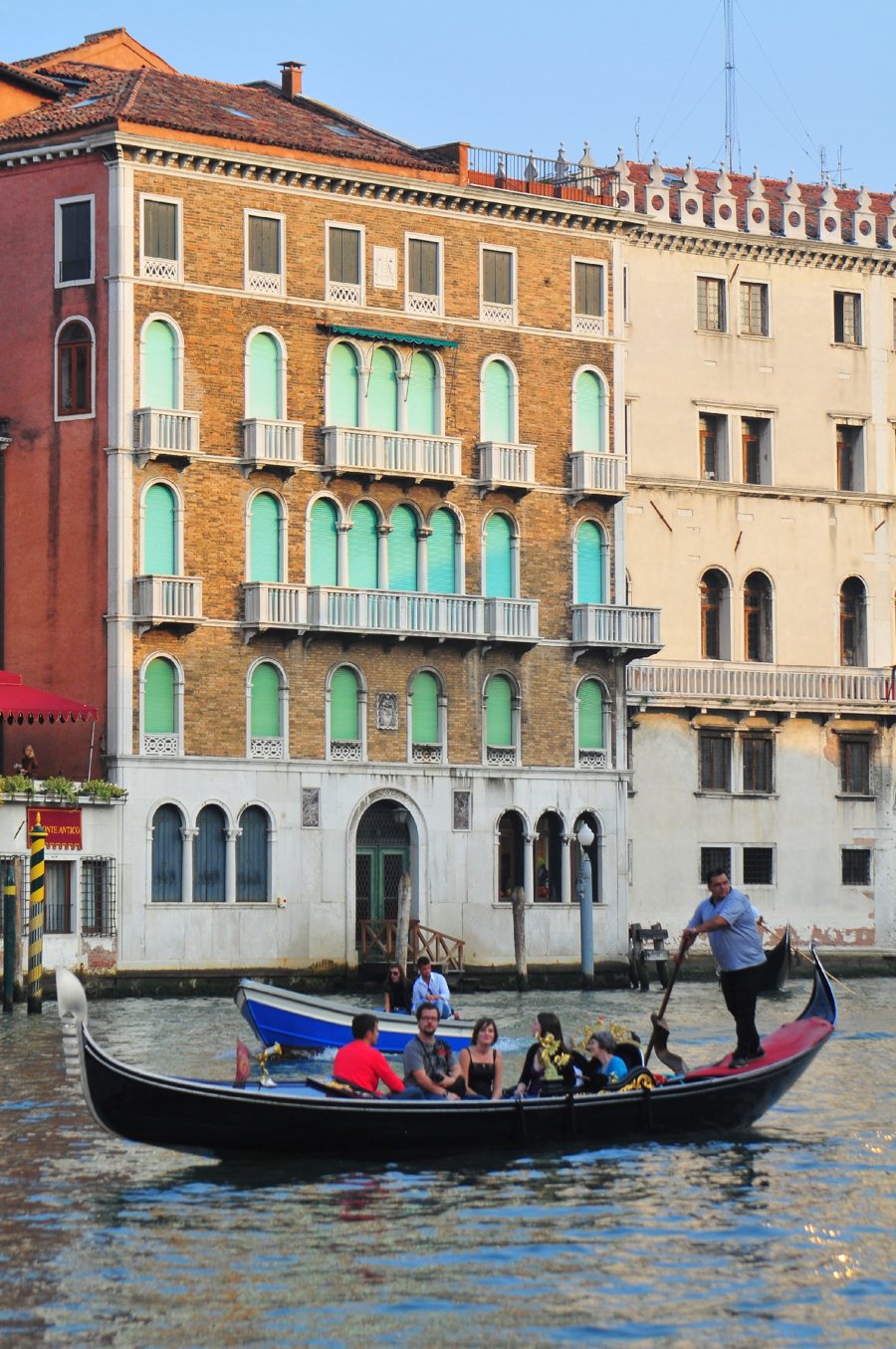 Eine Gondel gleitet auf einem Kanal in Venedig an historischen Häusern vorbei.
Photo: alesia
Eine Gondel gleitet auf einem Kanal in Venedig an historischen Häusern vorbei.
Photo: alesia
Distinguishing sea, lagoon and river mouth
At the seaside, the focus is on the open Adriatic. In a lagoon, islands, canals and their relationship to the mainland are part of the landscape. At a river mouth, a watercourse also connects the hinterland to the coast. These areas may lie close together, but they are not the same. The Tagliamento is an important point of reference near Bibione; around Caorle, the Livenza and Lemene rivers play a role. Venice and Chioggia, by contrast, are difficult to understand without the Venetian Lagoon.
The Venetian Lagoon is a distinct landscape, with an island city and other islands. It should not be used as a catch-all term for every body of water along the Veneto coast. Caorle and Bibione also have lagoon environments with their own local identities. This distinction is useful when planning a trip: a stay on the Adriatic can have a regional connection to a lagoon without being a stay in the Venetian island world itself.
Bibione: understanding the coast around the Tagliamento
Bibione lies near the mouth of the Tagliamento. Coastal, river and lagoon landscapes sit side by side here; the lagoon environment includes reed beds, small islands, canals and sand dunes. This makes it quite different from a simple beach panorama. The surroundings reveal themselves through several forms of water and land. If you choose Bibione as your base, you can make this the theme of your coastal stay instead of choosing a different town for every change of scenery.
Traditional fishermen’s huts, known as casoni, are among the cultural features of the lagoon area. They connect the landscape with its history of human use. This offers another way to see the seaside resort: beyond the tourist experience lies an environment shaped by waterways and fishing. For a landscape-focused trip, it is worth consciously distinguishing between sea, river and lagoon. These terms describe not only different views, but also different relationships between the natural environment and human activity.
Caorle: a waterscape with a historic town centre
Caorle lies on the northern Adriatic between Trieste and Venice. Its municipal area borders the lagoon and the Livenza and Lemene rivers. In the historic centre, calli, campielli, the cathedral and a cylindrical bell tower shape the townscape. The result is a coastal setting where the town’s history matters as much as its seaside location. A stay in Caorle therefore also appeals to travellers interested in the relationship between the town’s layout and its waterways.
Fishing is part of the town’s history, and the lagoon area around Falconera is associated with traditional casoni. The historic centre and lagoon landscape tell different parts of the same story of local development. A walk through the lanes and squares draws attention to the built-up town, while the lagoon surroundings open up a different scale. Caorle is therefore not simply another version of Bibione’s landscape. Here, the historic town provides a particularly clear point of reference within the coastal region.
Jesolo and Eraclea: a coastal location is not the same as a town centre
In Jesolo, it is important to distinguish between the coast and Jesolo Paese. Jesolo Paese is the historic centre of the local community, while Lido di Jesolo’s name points to its beach setting. This matters when comparing locations: not every part of the coast consists of a historic town lying directly beside the sea. In the Jesolo area, the older town centre and the development of the seaside resort are separate focal points. Lido di Jesolo as a place to stay should therefore not be treated as interchangeable with every address in the municipality.
The coastal surroundings of Jesolo include pine landscapes and the river areas of the Sile and Piave. Eraclea Mare, too, should be identified precisely as a coastal resort in the municipality of Eraclea; its local pine forest and the Laguna del Mort are part of its landscape. So if you compare this area with Caorle or Bibione on a trip, look beyond the beach. The question is whether historic townscape, river scenery, or the combination of coast and pine woods is the focus you are looking for.
The Lido: Adriatic coast within an island world
The Lido di Venezia lies between the Venetian Lagoon and the Adriatic. It combines a seaside setting with its location on a lagoon island. Art Nouveau villas, the townscape of Malamocco with its lanes and small squares, and the dunes of Alberoni complement the beach. By choosing the Lido di Venezia, you are not simply choosing another coastal destination, but a base between two distinct bodies of water, with its own island history.
The names Lido di Venezia and Lido di Jesolo are similar, but they refer to different places. Especially on a first trip to Veneto, this distinction should guide your mental map. On the Venetian Lido, the island and lagoon are key points of reference; in the Jesolo area, the coast, historic town centre and river hinterland relate to one another differently. Similarity of name tells you neither that the two places offer the same kind of stay nor that everyday travel routes will be comparable.
Chioggia and Sottomarina: the southern edge of the lagoon
Chioggia lies between the sea and the Venetian Lagoon, at its southern edge. Its historic urban area has canals and regularly laid-out streets; Corso del Popolo is an important point of reference. Sottomarina belongs to the same municipality and is linked to the municipal centre by the Ponte dell’Isola dell’Unione. A stay in Chioggia therefore brings a different kind of place to the fore than a beach base in Sottomarina, even though both belong to the same municipality.
This pair makes the limits of simple coastal labels particularly clear. The historic lagoon city and the Adriatic beach are spatially connected, but remain distinct environments. A look at Chioggia’s canals shows that the city is more than a mere backdrop to the beach. Conversely, a base in Sottomarina is focused on the sea. Anyone exploring the coast as a sequence of landscapes will find here a useful contrast with Bibione’s river-mouth setting and Caorle’s combination of a historic centre and its own lagoon environment.
A coastal trip needs a common thread
When travelling along the Adriatic, you can choose places based on a shared interest. Waterscapes connect Bibione, Caorle and the Venetian Lagoon; historic townscapes link Caorle and Chioggia; and the relationship between island and sea leads to the Lido. This is more rewarding than trying to tick off every seaside resort. Choose two areas whose differences genuinely interest you. That way, a coastal trip can show why the Adriatic in Veneto does not have the same surroundings everywhere.
Padua, Vicenza, Treviso and Belluno belong to other urban or landscape settings in Veneto and are not Adriatic coastal destinations. They can be destinations in their own right, but should not blur the mental picture of the coastal area. If swimming and a suitable holiday rhythm are the main priorities, a beach holiday in Veneto has a different focus from a landscape-oriented coastal trip. In either case, the specific place and its surroundings tell you more than the sweeping promise of a holiday on the Adriatic.
