
Venice, the Lagoon and the Adriatic Coast
Find accommodation
The Metropolitan City of Venice encompasses more than the lagoon city: its territory also includes Adriatic beaches, river mouths, smaller historic towns and the northeastern mainland. When planning a trip, the first question is whether the focus is on culture and waterways, beach days, or a combination that includes the hinterland.
Distinguishing the lagoon city from the mainland
Venice’s historic island city is a destination in its own right, with routes on foot and along the canals. Arrival, luggage and accommodation often involve different transport hubs; if you arrive by train, come from the airport or park on the mainland, plan the onward journey according to your arrival point. If you want to connect different districts and sights, choose routes that suit your arrival location. The connections to your accommodation vary depending on whether you start at the airport, railway station or parking area, so getting to Venice depends on your exact starting point.
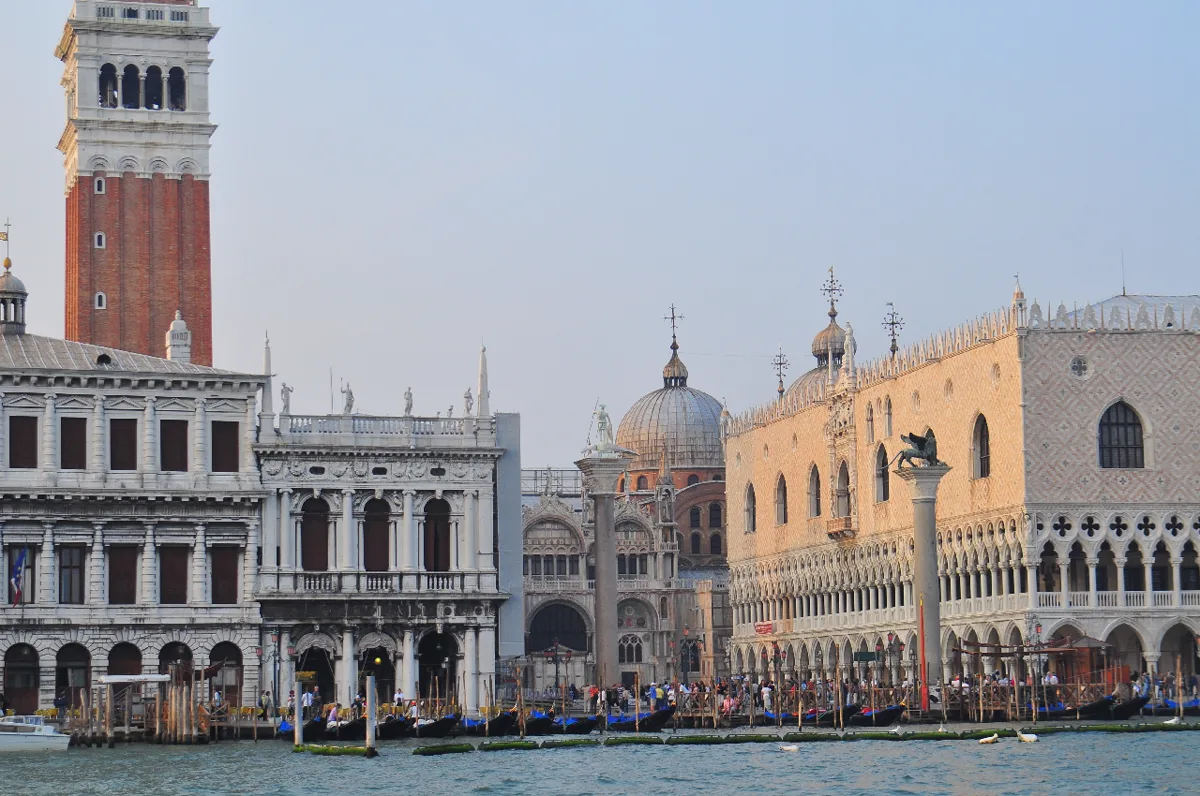 Blick vom Wasser auf den Campanile, Gebäude am Markusplatz und den Dogenpalast in Venedig.
Photo: Alesia Belaya
Within the city, bridges, steps and narrow, crowded streets can make a short walk with a suitcase take longer. Water buses are part of public transport, but they do not replace every walk to your door. When choosing accommodation, consider your luggage, arrival time and the final stretch of the journey together. For individual islands and longer canal journeys, vaporettos and getting around can be part of your daily plans. Comparing different districts and places to stay can help you choose accommodation: central locations, peace and quiet, and transport links should all suit your plans.
Murano, Burano, Torcello and the Lido are part of the lagoon, but each offers a different experience and takes time to reach by water. It is easier to choose which islands to visit if you focus on a few highlights rather than trying to squeeze every stop into the same day. Comparing Murano, Burano and Torcello can help you decide based on your interest in crafts, townscapes and landscapes. The Lido combines the lagoon with a seaside stay, but getting around there is different from visiting mainland beach resorts.
Jesolo and Eraclea: beach holidays in different settings
Jesolo is known for its long sandy beach and three distinct areas: the centre, Faro and Pineta. The centre is a better fit for travellers looking to combine the beach with restaurants and evening entertainment. The surroundings change towards Faro, while Pineta offers a stronger connection to trees and walking paths. The nearby Sile and Piave river areas are also part of the local landscape. If you want to cycle, choose a route based on your preferred distance and starting point at your resort, rather than comparing only how close it is to the beach.
Eraclea and Eraclea Mare offer a different focus. The municipality describes the pine forest as a defining feature of the coastal resort; the nearby Laguna del Mort is a natural area in its own right. This setting suits travellers who want to combine beach days with walks among the trees. If you plan to visit Venice every day during your stay, the straight-line distance is not the only factor: a seaside resort has its own rhythm, while the lagoon city involves extra travel and time.
Caorle: fishing harbour, old town and coast
Caorle combines the Adriatic coast with a historic town centre that has grown over time. The municipal tourism office describes around 18 kilometres of coastline and highlights the importance of tourism and fishing. The harbour canal offers a different way to experience the town’s maritime character from the long stretches of sandy beach. In the centre, narrow streets, small squares and colourful houses shape the feel of a walk. Caorle is therefore a good choice for holidaymakers who value a town with a life of its own as well as swimming. If you want to combine the coast with shorter excursions, consider the actual routes between the town centre, beach and harbour when choosing where to stay.
The coast also includes different holiday areas, not all of them right next to the historic centre. Staying in a quieter area on the outskirts can offer more distance from the evening bustle, while a central location shortens the walk to restaurants and the harbour. The right compromise depends on whether your trip will focus on beach time, walks or excursions. If you are combining your stay with Venice, setting aside a full day for the city is usually simpler than trying to fit travel, sightseeing and the return journey between two stretches of beach.
Bibione and San Michele al Tagliamento
Bibione is a seaside resort in the municipality of San Michele al Tagliamento. It is best suited to longer beach holidays, with holiday accommodation and a seasonal seaside atmosphere. Your precise location in the resort can make a big difference to everyday life: proximity to the beach, shops, quiet surroundings and places to go for dinner are not the same everywhere. Bibione lies in the far northeast of the area; if you plan to travel regularly from there to the historic lagoon city, factor the extra journey time into the number of days you plan to spend in Venice.
The northern coastal area is more than just an extension of the city. River and lagoon landscapes, beach resorts and inland communities offer different kinds of excursions. For families planning several beach days, a base near the sea can make for a more relaxed schedule. On a tour with several cities, by contrast, changing accommodation may be more convenient than making long journeys every day. Make your decision based on the number of times you will move, the amount of luggage and the kind of evenings you want to spend.
Chioggia and Sottomarina: city life on the southern lagoon
Chioggia lies in the south of the lagoon area and has a distinct townscape of its own. The San Domenico, Vena and Lombardo canals run through the historic town; bridges and densely built streets create a different network of routes from the more open mainland coast. The fish market and harbour reflect the continuing importance of fishing. Corso del Popolo is a central thoroughfare in the town centre, while Sottomarina puts more emphasis on a beach holiday. Staying in the area can combine both, but the distance between town and beach should be part of your choice of accommodation.
Chioggia is neither a smaller copy of Venice nor just a stop on the way to the beach. Travellers who enjoy canals and a lively harbour town can spend time here at different times of day; those mainly looking for sandy beaches should focus on Sottomarina. If you want to visit both towns, it is worth planning your time based on more than the distance on a map. Water routes, transfers and the return journey all affect how relaxed a day trip will be.
Portogruaro and the northeastern hinterland
Portogruaro is a smaller historic town in the northeast. The Lemene flows through the centre; old mills, squares and the town’s architecture are closely connected to the river. The town’s history is also linked to trade between Venice and the lands beyond the Alps. Portogruaro is therefore a good choice for a quieter city break or as a stop on a trip between the coast and the hinterland. If you plan to visit several smaller destinations, consider whether they are easy to reach using your chosen mode of transport.
The Metropolitan City offers a wide variety of trips: a packed city itinerary in Venice, a longer beach holiday, a stay in Chioggia with its harbour and old town, or a stop in the eastern inland area. If you want to travel beyond the lagoon, compare the provinces and landscapes of Veneto based on route and length of stay. For a longer itinerary, getting to Veneto and travel times also matter; for a few days in the lagoon city, there are different ways to enjoy a holiday in Venice.
Choose your base to suit your trip
For several days of museums, churches, narrow streets and islands, staying in Venice or at a well-connected transport hub is generally more practical than commuting from the beach every day. For family holidays with plenty of time by the sea, Jesolo, Caorle, Eraclea Mare or Bibione may make a better base, although their character and distances vary. Chioggia is an interesting option if you want city life and a nearby beach. Portogruaro is better suited to a trip focused on small towns and the northeastern hinterland.
If you are combining several areas, a simple comparison can help: How many full days do you want to spend in each place, how often will you move your luggage, and which evenings would you like to spend locally? Changing accommodation may save daily return journeys, but it takes time to pack and move. A fixed base makes relaxed beach days easier, but can mean long journeys to more distant attractions. The choice becomes clearer if you first decide what matters most on the trip and then add day trips.
Your travel group also affects the best itinerary. With children, short walks to your accommodation and an easy place to return to at midday may matter more than seeing as many attractions as possible. For a cultural trip, staying close to the planned sights is often more valuable than having a particularly wide range of leisure activities. If you are travelling without a car, arrange your destinations around the rail, bus and boat routes you can actually use; by car, parking availability and the route from the car park to your destination matter. This way, the lagoon city, coast and inland area remain distinct choices rather than making every overnight stop seem equally suitable.
Frequently asked questions about the Metropolitan City of Venice
Is the area still called the Province of Venice?
The administrative unit is the Metropolitan City of Venice, which replaced the former province in 2015. “Province of Venice” is still used informally as a shorthand for the geographical area.
Is Venice the same as the Metropolitan City?
No. Venice can refer to the historic island city or the municipality. The Metropolitan City is a larger area that includes many other municipalities, coastal resorts and mainland towns.
Where should I stay if I want to combine Venice with the beach?
It depends on what you want to focus on. Accommodation in or near the lagoon city is convenient if you plan to spend several days sightseeing; coastal resorts offer different conditions for a longer beach holiday. Staying in two places can reduce commuting, but means moving accommodation once.
Which places combine city and sea?
Chioggia and Sottomarina are close to each other and offer both a town setting and a beach. Caorle combines a historic town centre with coastal areas. The exact location of your accommodation also affects how easy it is to combine the two in everyday plans.
