
Murano, Burano, and Torcello: Glass, Lace, or Lagoon History?
Murano is the right choice for glass art, Burano for lace-making and colorful houses, and Torcello for early lagoon history and religious architecture. For a shorter outing, Murano alone is a good option; a full day on the islands can combine Burano with Torcello. It is possible to plan a grand circuit of all three islands, but a museum visit or a more in-depth church tour can quickly get squeezed out.
Murano: make glass the focus of a cultural visit
Murano brings together canals, island districts linked by bridges, and a tradition of artistic glassmaking. A visit need not begin with a purchase. If you are interested in forms, materials, and the development of the craft, the Museo del Vetro can be the main focus. The waterside paths complement the museum visit and reveal the island as a place in its own right, not just the name behind a souvenir.
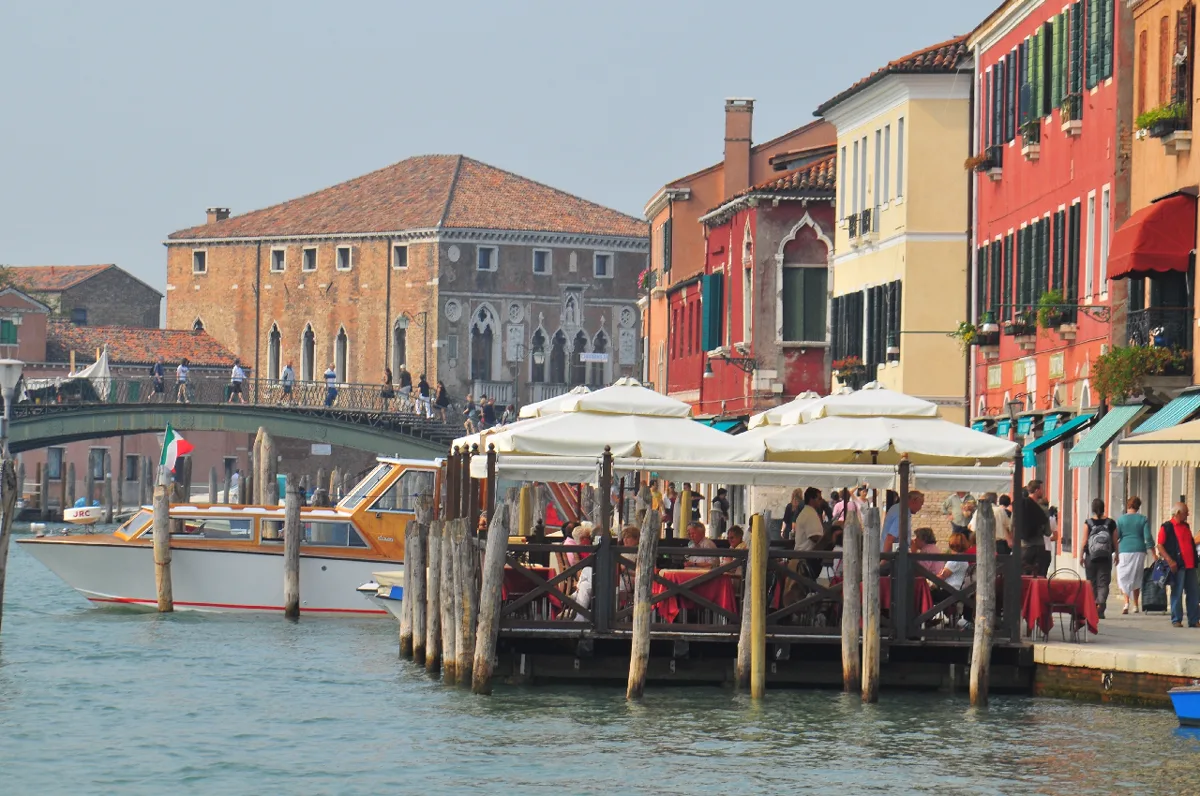 Bunte Häuser, Boote und eine Brücke säumen einen Kanal auf einer Insel der venezianischen Lagune.
Photo: Alesia Belaya
Bunte Häuser, Boote und eine Brücke säumen einen Kanal auf einer Insel der venezianischen Lagune.
Photo: Alesia Belaya
The key difference is not which island is considered the most beautiful, but what you want to make the focus of your visit. Glass and lace are two distinct crafts; Torcello’s buildings, by contrast, take you back to the lagoon’s earliest settlements. Choose one of these themes first, then add a walk and a break. That way, your outing has substance rather than being just a sequence of departures and arrivals.
The glass museum is housed in Palazzo Giustinian. The palace was once the seat of the Bishop of Torcello; in 1861, the museum’s first collection was displayed in the central hall, and it later expanded throughout the building. This history connects Murano’s glassmaking with another lagoon island. It gives the visit a geographical and historical context that goes beyond looking at individual glittering objects.
A glassmaking demonstration, a museum visit, and browsing in shops each serve a different purpose. A demonstration focuses on the process, a museum on history and objects, and a shop on choosing something to buy. These aims should not be confused when planning your day. If the museum is your main destination, leave time for a stretch along the canal rather than adding extra stops simply because they are nearby.
Murano is closer to the historic city than Burano, making it a better fit for an outing followed by time in another part of the city. That does not make the island a casual, ultra-short stop: the journey there, walks on the island, and the return trip are all part of the visit, just like the main attraction. For a day that includes the glass museum and another art visit in Venice, two clear priorities are usually enough.
Burano: admire the façades and discover lace-making
The colorful houses are the most striking feature of Burano. Canals, small bridges, and homes together make up the townscape; there is no single viewpoint that defines the visit. A walk is more rewarding when it links different stretches of canal and squares. If you photograph only the first row of houses and leave straight away, you will take home an impression, but little sense of the place as a whole.
Lace-making is a second, distinct reason to visit. The Museo del Merletto opened in 1981 in the rooms of the historic lace school. The school was founded in 1872 to support a long-established craft tradition. Alongside its façades, Burano therefore has a tangible cultural history. A museum visit can focus on the fine details of lace, while a walk outside brings together color, water, and residential architecture.
This combination works particularly well for a group with varied interests: some may want to learn about craft history, while others mainly want to explore the town. Rather than adding several islands as a supposed compromise, Burano can bring both interests together under one shared theme. A designated meeting point on a square is more suitable than a narrow bridge or a doorway.
Burano lies farther out in the lagoon than Murano. Its visit therefore calls for a larger share of the day, especially if you plan to visit the lace museum and have a meal. The homes are private living spaces; respecting residents means keeping doorways clear and photographing discreetly from public paths. A longer stay is more valuable here than trying to collect as many colorful photo opportunities as possible.
Torcello: explore early settlement through two buildings
Torcello takes you to a different period in lagoon history from that of the densely built historic city. The island is one of the lagoon’s oldest settlements. Its visit centers primarily on Santa Maria Assunta and Santa Fosca. The walk from the landing to the historic buildings is part of this distinct experience of place: instead of a succession of shopping streets and canals, the focus is a small historic center.
Santa Maria Assunta features Byzantine mosaics, including a depiction of the Last Judgment. Santa Fosca has a Greek-cross floor plan. The two buildings can therefore be viewed from different angles: imagery and interior space in one, architectural form and spatial layout in the other. Torcello is not simply a quieter stop between two other islands, but a destination in its own right for anyone interested in architecture and history.
If you are visiting for the art and architecture, do not reduce the trip to a brief look from the outside. Conversely, a walk to the historic center can be worthwhile without an extensive sightseeing itinerary if landscape and local history are your main interests. Torcello offers a different kind of visit from Murano’s glass and Burano’s façades. This contrast is exactly what makes pairing it with Burano appealing, provided you allow enough time for both islands.
One island, a themed pair, or a grand circuit?
For a half-day outing, Murano is the obvious choice. The glass museum and a walk along the canals go together naturally; the rest of the day can be spent in the historic city. If you want to see Burano, however, little is gained by making the longer journey just for a very brief photo stop. Burano can just as well be the day’s only island, especially if you are interested in the lace museum.
Burano and Torcello make a pair with a striking change of scene: color and craft history give way to early churches and a less densely built island landscape. Their proximity makes this combination practical, but it does not eliminate the boat ride, possible transfers, or walks. A day visiting both islands therefore needs one main focus. If church art is the priority, Torcello should not be left until the remaining time is already running short.
Murano and Burano can also be explored as a pair of craft traditions. Comparing glass and lace is a genuine thematic connection, not just a popular combination of names. When planning such a day, decide whether both museums—or a museum and a walk around the island—should form the core of the visit. The grand circuit of all three islands is best suited to getting an overview. It is no substitute for an in-depth visit to all three cultural attractions.
The outing starts at your accommodation, not at the landing
Fondamente Nove is an important departure point for the northern lagoon. However, the full outing also includes the journey from your accommodation to the stop and the return trip after your last boat ride. If you are staying on the other side of the city, that leg is an additional part of the day. Comparing where to stay in Venice helps explain why the same island outing calls for a different schedule depending on where you are based.
ACTV operates water buses in the city and to the lagoon islands. For vaporetto routes, stops, direction of travel, transfers, and walking distances together make up the full outing. A break on the island and some extra time for the return journey are sensible parts of the plan. Visiting an island just before a train or flight leaves less room for flexibility than taking the same trip on a free day.
When staying overnight on an island offers a different experience
Staying on Murano or Burano changes the nature of your visit: the island becomes your base and place to return to, rather than a day-trip stop. If you visit the historic city from there over several days, you will make the water journey part of your regular routine. This works especially well when the island itself is a main reason for the trip. For a first visit with many city sights to see, accommodation in Venice offers a different starting point, from which a single day on the islands can be planned separately.
For Torcello, the focus in this comparison is the excursion to its historic center. All three islands belong to the same lagoon environment, but they are not interchangeable places to stay or visit. A glass-focused trip, a day at the lace museum, and a visit to Byzantine mosaics each call for a different focus. These differences should guide your choice, not simply the length of a supposedly complete island circuit.
Do not make city and island visits compete
If you have just one full day in Venice, exploring another city district may be a better complement than taking an extended circuit of the islands. Walking routes through Venice offer distinct alternatives in Cannaregio, Dorsoduro, and Castello. With several days, however, you can deliberately separate an island visit from the monumental center. That leaves more time not only on the island, but also makes your visit to the city less rushed.
The choice comes down to a simple set of priorities: glass calls for Murano, façades and lace point to Burano, and early lagoon churches make Torcello the right choice. Two islands make a rewarding combination when their differences enrich the day. One is enough when it fully satisfies your interests. The best result is not the longest route, but a visit in which the cultural destination, the walk, and the return journey all fit together.
